
Index of Farmer's Market Online® Guides
Farm Kitchen
Breads
Chocolate
Coffee
Corn
Curry
Raisins
Spices and Culinary Herbs
Tea
Good Spirits & Fine Liqueurs
Bourbon
Brandy
Gin
Rum
Tequila
Vodka
Whiskey
Home & Garden
Candles
Dough Figurines
Wreaths
In Season
Air Plants
Aloe Vera
Artichoke
Asparagus
Basil
Blackberries
Blueberries
Blood Orange
Cabbage
Catnip
Cranberries
Egyptian Walking Onions
Figs
Garlic
Grapefruit
Kale
Kohlrabi
Pawpaw
Peaches
Pecans
Peppers
Pomegranates
Pumpkin
Shelling Beans
Sour Cherries
Meats & Fish
Turkey
Nuts & Grains
Chestnuts
Plants
Air Plants
Azaleas
Bigleaf Hydrangea
Bonsai
Bronze Dutch Clover
Camellia
Carnivorous Plants
Catnip
Chestnut
Christmas Cactus
Cranberry
Easter Lily
Gentian
Heuchera
Mint
Orchids
Ornamental Cabbage
Ornamental Grasses
Pasque Flower
Pawpaws
Pinyon Pine
Poinsettia
Roseroot
Salvia
Sneezeweed
Voodoo Lily
Zinnia
Specialty Foods
Spices

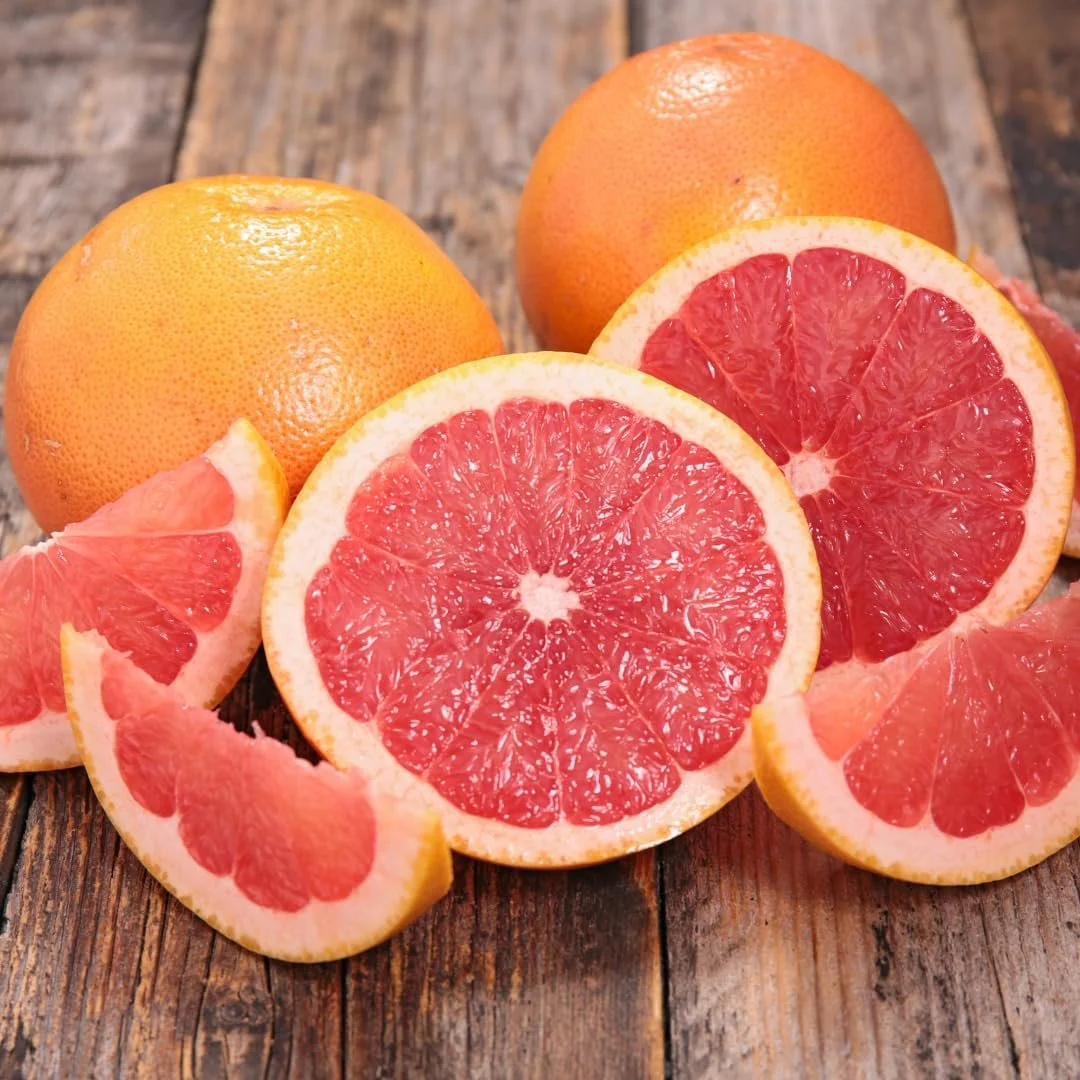
Grapefruit
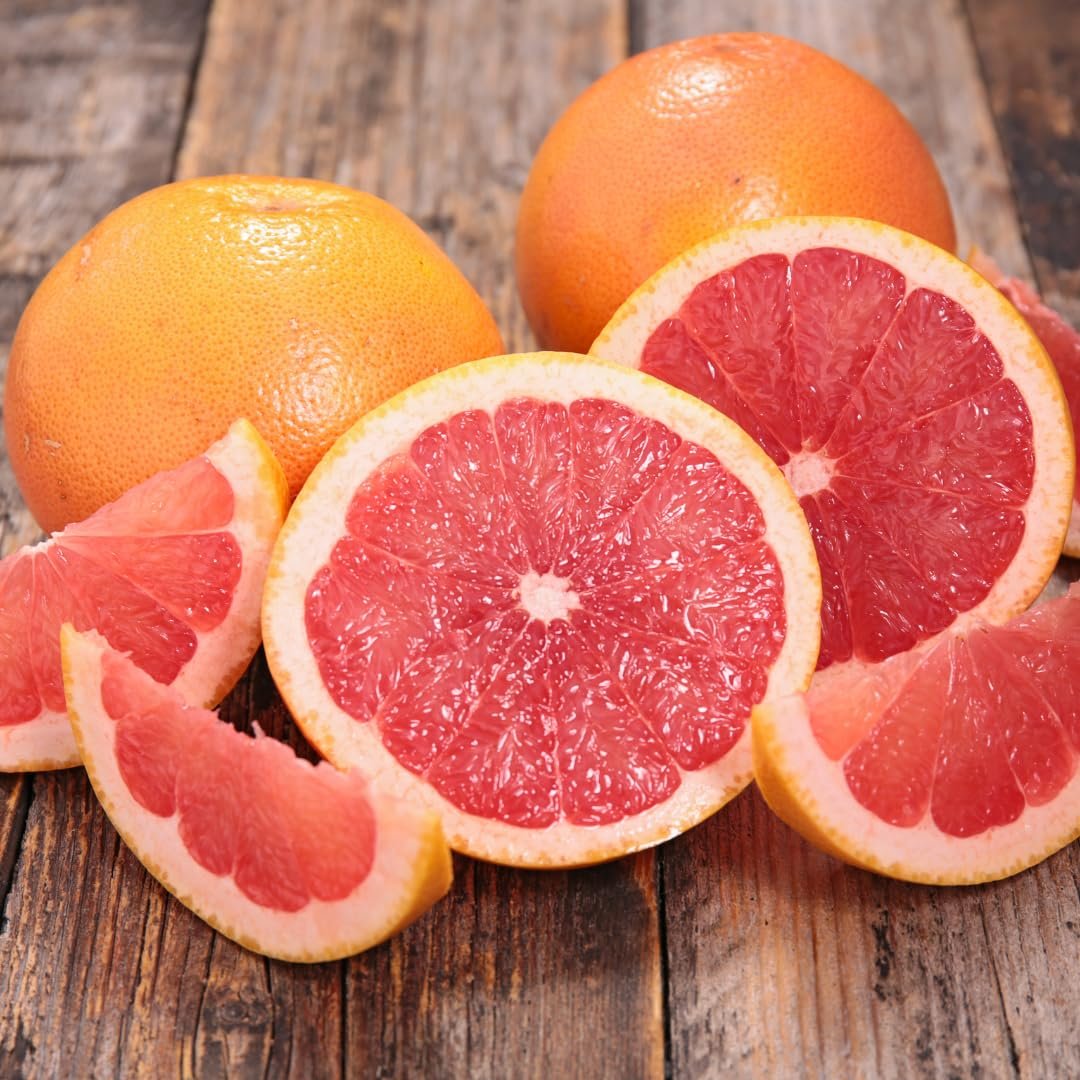
Grapefruit, like all citrus fruit, is a Hesperidum, or a large modified berry with a thick rind.
Why is it called a grapefruit? It doesn't look like a grape.
It is believed that the name refers to the grapelike way that grapefruit grows in clusters on a tree. Another explanation is that the premature grapefruit looks similar in shape to unripe green grapes. The grapefruit is a probably cross between a Pummelo and a sweet orange.
Vitamin C and a Lot More
Just half of a small- to medium-sized grapefruit has about 40 milligrams of vitamin C. That's a good portion of the 75 milligrams daily recommended for women and 90 milligrams for men.
Given a choice, opt for pink or red types. For just a slight increase in calories (50 compared with 40), pink or red grapefruit offers significantly more vitamin A, beta carotene and lycopene than its paler cousin. Both types of grapefruit also offer some potassium and a gram or two of fiber.
Go for Glossy
Experts recommend choosing grapefruit that is glossy, round, smooth and heavy for its size. Avoid grapefruit with brown or soft spots. You can store uncut grapefruit at room temperature for up to a week, or leave it in the refrigerator for up to eight weeks. But if possible, serve grapefruit at room temperature -- it's juicier that way
Mixing With Drugs
Grapefruit juice can interact with some types of prescription medication. According to the Centers for Disease Control and Prevention's Fruit and Veggies Matter program, the effect of grapefruit juice was discovered by accident when researchers were trying to determine if alcohol had an effect on a particular blood pressure medication. To hide the taste of the alcohol, the scientists put it in a glass of grapefruit juice. They found the alcohol didn't have an effect, but the grapefruit juice did -- it greatly increased the medication's effects. That can be dangerous. Check with your doctor or pharmacist to be sure any prescription drugs you take aren't affected by grapefruit juice; if there's a problem, it's best to avoid grapefruit or inquire if an alternative medication is available.