
Index of Farmer's Market Online® Guides
Farm Kitchen
Breads
Chocolate
Coffee
Corn
Curry
Raisins
Spices and Culinary Herbs
Tea
Good Spirits & Fine Liqueurs
Bourbon
Brandy
Gin
Rum
Tequila
Vodka
Whiskey
Home & Garden
Candles
Dough Figurines
Wreaths
In Season
Air Plants
Aloe Vera
Artichoke
Asparagus
Basil
Blackberries
Blueberries
Blood Orange
Cabbage
Catnip
Cranberries
Egyptian Walking Onions
Figs
Garlic
Grapefruit
Kale
Kohlrabi
Pawpaw
Peaches
Pecans
Peppers
Pomegranates
Pumpkin
Shelling Beans
Sour Cherries
Meats & Fish
Turkey
Nuts & Grains
Chestnuts
Plants
Air Plants
Azaleas
Bigleaf Hydrangea
Bonsai
Bronze Dutch Clover
Camellia
Carnivorous Plants
Catnip
Chestnut
Christmas Cactus
Cranberry
Easter Lily
Gentian
Heuchera
Mint
Orchids
Ornamental Cabbage
Ornamental Grasses
Pasque Flower
Pawpaws
Pinyon Pine
Poinsettia
Roseroot
Salvia
Sneezeweed
Voodoo Lily
Zinnia
Specialty Foods
Spices

Peaches
from the Farm Kitchen at Farmer's Market Online
Nutritional Benefits of Peaches
A good source of fiber, peaches help keep blood sugar and cholesterol low. They include flavonoids and deliver 10 percent of recommended daily intake of vitamin C. Peaches are also low in calories and are filling due to their high water content, typically between 80% and 90%.
Peaches also contain potassium and magnesium. Potassium helps maintain healthy blood pressure and magnesium assists with building strong bones.
Serving size: 1 medium fruit, Calories: 38.2, Fat: 0.2 grams, Cholesterol: 0 milligrams, Sodium: 0 milligrams, Total Carbohydrates: 9.3 grams, Dietary Fiber: 1.5 grams, Sugars: 8.2 grams, Protein: 0.9 grams
Cultivars
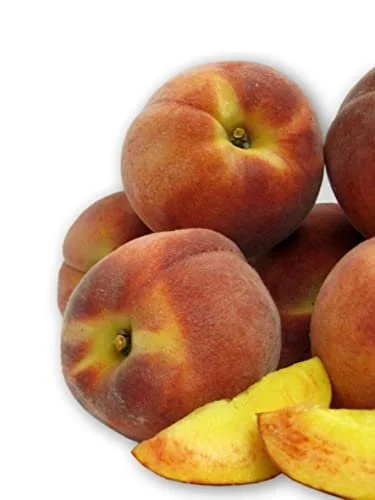
Peaches available in the U.S. include Belle of Georgia (pink skinned with aromatic, sweet, juicy white flesh), Crimson Lady (almost smooth skin is bright yellow blushed with bright red purple; the bright yellow flesh develops sweetness as the fruits ripen off the tree), Flavorcrest (yellow lightly mottled with red-orange; the deep yellow flesh has the perfect balance of a high-acid, sweet-tart flavor), Ivory Princess (ivory with deep pink-blushed skin and aromatic, intensely swet, deep cream flesh).
Harvest
The fruit should be very fragrant at harvest.
Depending on the variety and location, peaches are harvested from late June through August. To determine if yours are ready to pick, give them a light squeeze. They will give slightly to pressure near the stem.
“Cup the fruit in your hand and gently twist,” says Christy Wilhelmi inGrow Your Own Mini Fruit Garden. “If they are ready they will come right off.”
Picking Your Peaches
Avoid peaches that are too firm, wrinkled, or very soft. Make sure there are no dark spots, as this fruit is easily damaged.
Preparation
Peaches should be rinsed thoroughly before consuming or cooking with them.
Fresh peaches rinsed in cold water are ready to eat. They can be eaten with or without the peel, but keep in mind that many of the nutrients are contained in the peel.
Fresh peaches are juicier and have a better flavor when served at room temperature.
If you need to peel peaches for a recipe, it can be done quickly by blanching them in boiling water for a minute and then placing them immediately into ice water to
stop the cooking.
Lemon juice may be used on sliced peaches to maintain their bright color and prevent them from turning brown.
Slice and serve in yogurt or over ice cream.
Add to fruit salads.
Add to frozen daiquiris, smoothies or shakes.
Add to breads, pies and pastries.
The flavor of peaches complements poultry dishes. Add a peach sauce or salsa to top grilled chicken breast.
Peach cobblers are a summer favorite.
Storage
Ripe peaches may be stored in a plastic bag in the refrigerator for three to five days.
If not yet fully ripe, do not refrigerate. If the fruit needs to ripen, keep the peaches in a paper bag at room temperature for one to three days or until ripe, and then refrigerate.
Peaches Used to Be Harder and Less Sweet
This popular tree fruit is beloved for its sweet, juicy profile, but it once had hardly any flesh — and what it did have was less juicy with a more earthy taste. Peaches originated in China; fossils indicate that they even predated humans. Originally, wild peaches were greenish and much smaller. The pit took up most of the space, the skin was waxy, and they had 4% less sugarthan today’s varieties. Over time, peach cultivation traversed continents and cultures, each refining its best traits to give us the fuzzy, rosy treat we love today.