
Index of Farmer's Market Online® Guides
Farm Kitchen
Breads
Chocolate
Coffee
Corn
Curry
Raisins
Spices and Culinary Herbs
Tea
Good Spirits & Fine Liqueurs
Bourbon
Brandy
Gin
Rum
Tequila
Vodka
Whiskey
Home & Garden
Candles
Dough Figurines
Wreaths
In Season
Air Plants
Aloe Vera
Artichoke
Asparagus
Basil
Blackberries
Blueberries
Blood Orange
Cabbage
Catnip
Cranberries
Egyptian Walking Onions
Figs
Garlic
Grapefruit
Kale
Kohlrabi
Pawpaw
Peaches
Pecans
Peppers
Pomegranates
Pumpkin
Shelling Beans
Sour Cherries
Meats & Fish
Turkey
Nuts & Grains
Chestnuts
Plants
Air Plants
Azaleas
Bigleaf Hydrangea
Bonsai
Bronze Dutch Clover
Camellia
Carnivorous Plants
Catnip
Chestnut
Christmas Cactus
Cranberry
Easter Lily
Gentian
Heuchera
Mint
Orchids
Ornamental Cabbage
Ornamental Grasses
Pasque Flower
Pawpaws
Pinyon Pine
Poinsettia
Roseroot
Salvia
Sneezeweed
Voodoo Lily
Zinnia
Specialty Foods
Spices
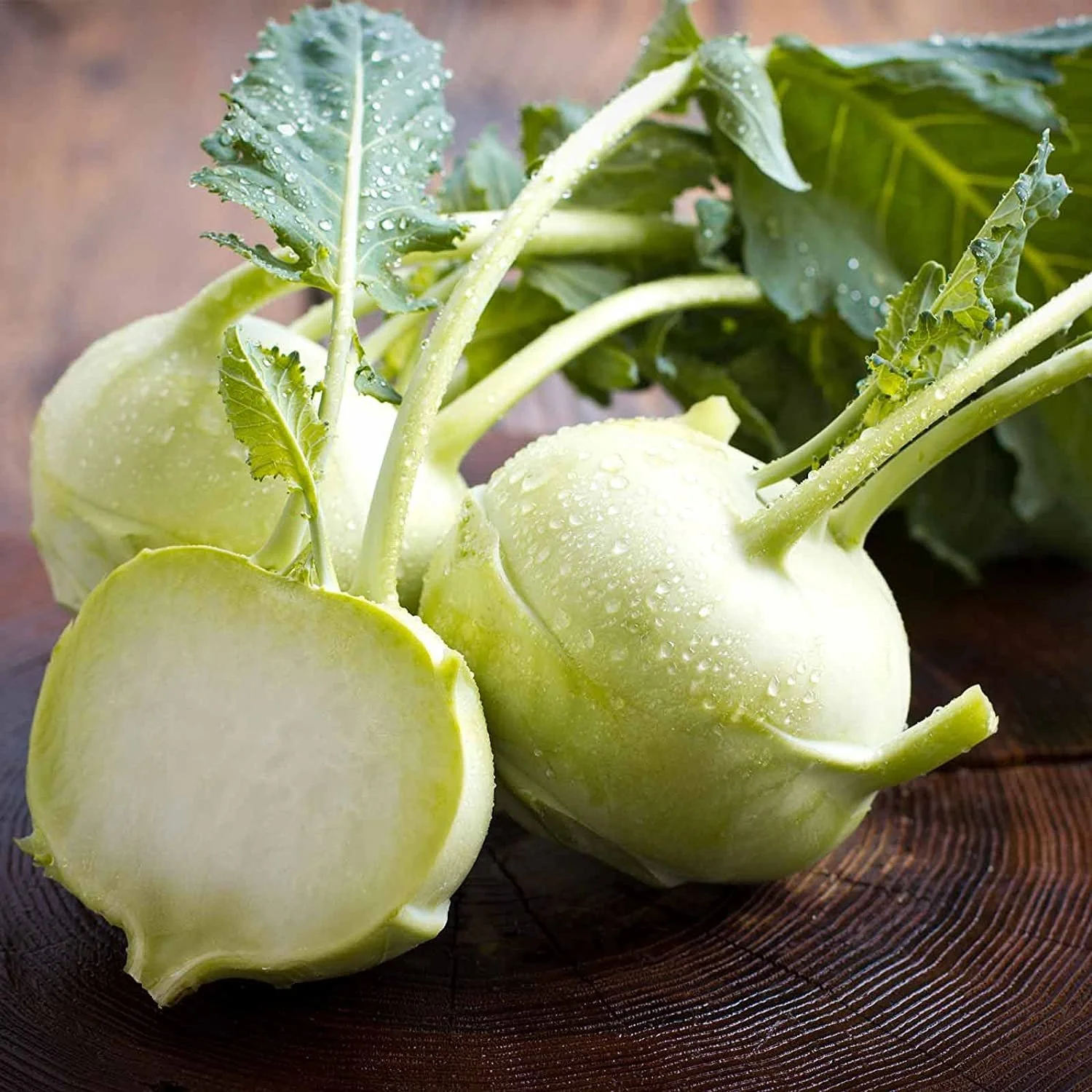
Kohlrabi
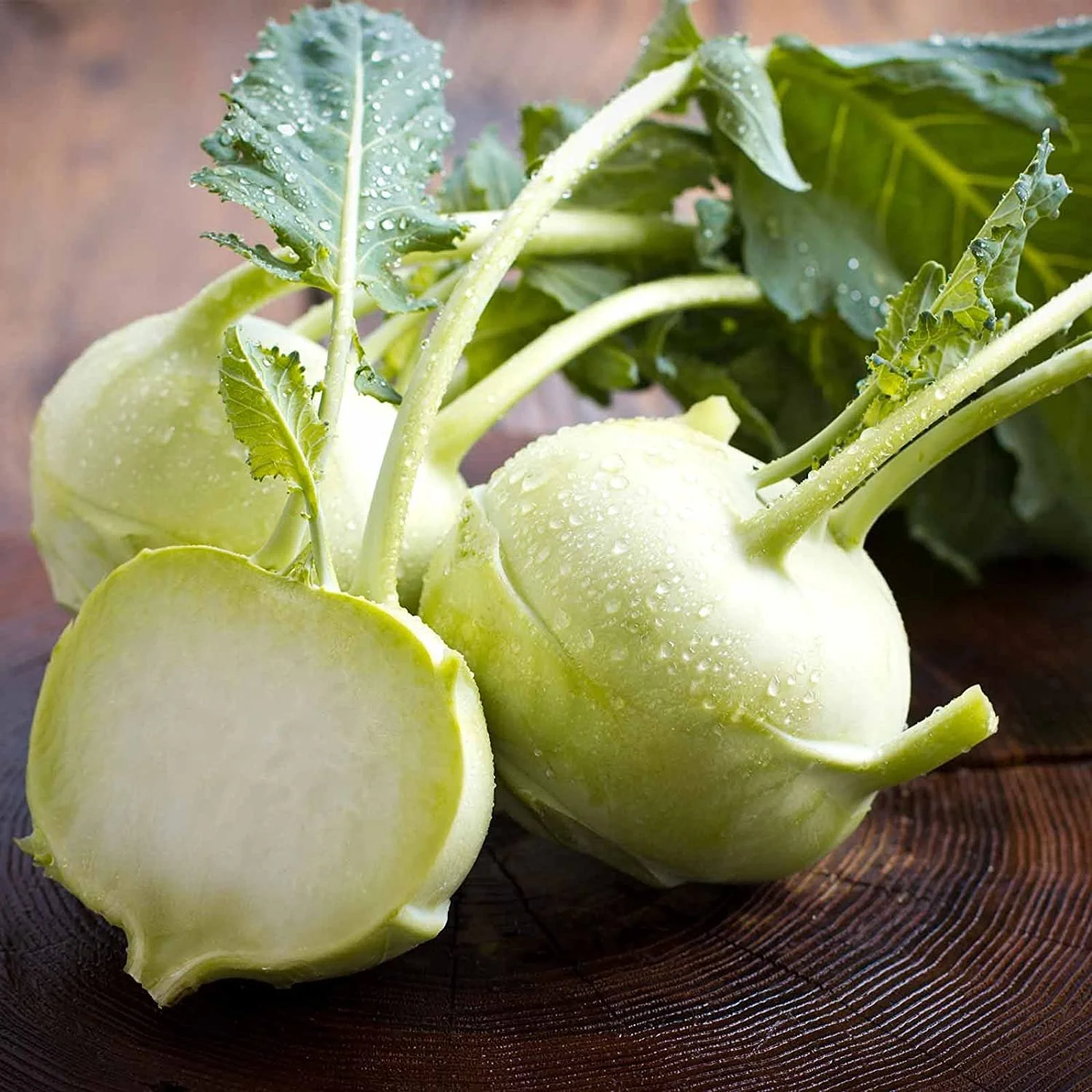
This is a mild, cabbage-like vegetable. It looks like a turnip growing above-ground. It has edible white, green, or purple bulbs, which are actually swollen stems.
Cultivation
Kohlrabi grows in loose, average soil.
For a spring crop, direct-sow seeds 4 to 6 weeks before the last average frost; plant ¼ inch deep, 10 seeds per foot. Or start seedlings for a fall crop indoors 6 to 8 weeks before the last average frost. When seedlings are around 4 inches tall, thin plants to (or set out transplants at) 5 inches apart in rows 1 foot apart.
Keep plants well watered, mulched and free of weeds. Cultivate carefully to keep from damaging delicate, shallow roots.
Harvest
Harvest immature “bulbs” when they are no more than 2 inches in diameter, cutting the stems 1 inch below the
swollen stem. Remove the leaf stems and leaves, and use the remaining stem as you would turnips.
Storage
Kohlrabi will keep for several weeks in the refrigerator and for several months in a cold, moist, root cellar.
Culinary Uses
Excellent for salads and stir-fry, kohlrabi has a cabbage-turnip taste, but milder and sweeter.