
Index of Farmer's Market Online® Guides
Farm Kitchen
Breads
Chocolate
Coffee
Corn
Curry
Raisins
Spices and Culinary Herbs
Tea
Good Spirits & Fine Liqueurs
Bourbon
Brandy
Gin
Rum
Tequila
Vodka
Whiskey
Home & Garden
Candles
Dough Figurines
Wreaths
In Season
Air Plants
Aloe Vera
Artichoke
Asparagus
Basil
Blackberries
Blueberries
Blood Orange
Cabbage
Catnip
Cranberries
Egyptian Walking Onions
Figs
Garlic
Grapefruit
Kale
Kohlrabi
Pawpaw
Peaches
Pecans
Peppers
Pomegranates
Pumpkin
Shelling Beans
Sour Cherries
Meats & Fish
Turkey
Nuts & Grains
Chestnuts
Plants
Air Plants
Azaleas
Bigleaf Hydrangea
Bonsai
Bronze Dutch Clover
Camellia
Carnivorous Plants
Catnip
Chestnut
Christmas Cactus
Cranberry
Easter Lily
Gentian
Heuchera
Mint
Orchids
Ornamental Cabbage
Ornamental Grasses
Pasque Flower
Pawpaws
Pinyon Pine
Poinsettia
Roseroot
Salvia
Sneezeweed
Voodoo Lily
Zinnia
Specialty Foods
Spices
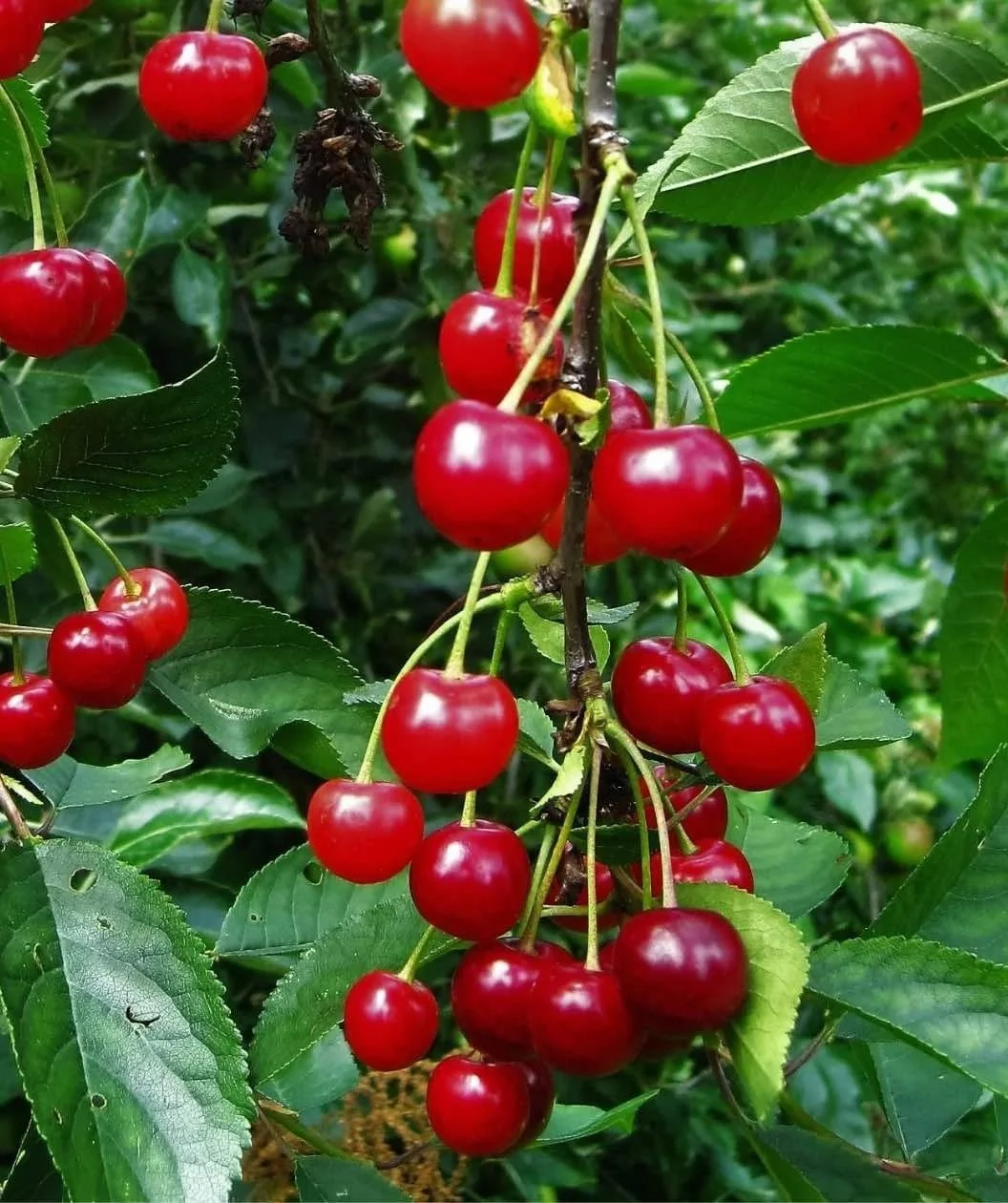
Sour Cherries

Most tart cherries in the United States are grown in Michigan. There are fewer than 10 acres growing in California, primarly due to the climate.
Compared with sweet cherries, sour cherries are smaller and softer, with acidity, flavor of the stone and a slight bitterness that shine through when cooked. They are indispensable for making pie, preserves, soup, brandy and albaloo polo, a Persian rice dish. Recently, tart cherry juice and dried fruit have become popular, as medical studies have shown that the fruit may have anti-inflammatory and disease-fighting properties.
Also known as tart or pie cherries, this fruit is available canned or frozen, but there are many bakers, jam makers and home cooks who seriously prefer the fresh fruit.
Cultivation
Compared with sweet cherry trees, sour cherry trees are much more cold hardy, and so they are more commonly grown in areas with frigid winters, such as Russia, Eastern Europe and the U.S. Midwest.
A century ago, Midwestern farmers grew dozens of varieties of sour cherries, but today, 99% of the domestic crop is of one centuries-old French type called Montmorency, and almost all of the harvest is processed. Because sour cherries are so delicate and because of quarantine restrictions for pests, fresh sour cherries from the Midwest rarely reach California markets.
Sour cherries are actually from a different species than sweet cherries such as Bing. They're a natural hybrid of sweet cherry with ground cherry, a cold-hardy bush that bears tiny, very tart and astringent fruit.
Harvest
Harvest of sour cherries is painstaking. The fruit has to be hand-picked so they keep their stems and don't leak or spoil. The fruit is soft and must be handled gently.