
Index of Farmer's Market Online® Guides
Farm Kitchen
Breads
Chocolate
Coffee
Corn
Curry
Raisins
Spices and Culinary Herbs
Tea
Good Spirits & Fine Liqueurs
Bourbon
Brandy
Gin
Rum
Tequila
Vodka
Whiskey
Home & Garden
Candles
Dough Figurines
Wreaths
In Season
Air Plants
Aloe Vera
Artichoke
Asparagus
Basil
Blackberries
Blueberries
Blood Orange
Cabbage
Catnip
Cranberries
Egyptian Walking Onions
Figs
Garlic
Grapefruit
Kale
Kohlrabi
Pawpaw
Peaches
Pecans
Peppers
Pomegranates
Pumpkin
Shelling Beans
Sour Cherries
Meats & Fish
Turkey
Nuts & Grains
Chestnuts
Plants
Air Plants
Azaleas
Bigleaf Hydrangea
Bonsai
Bronze Dutch Clover
Camellia
Carnivorous Plants
Catnip
Chestnut
Christmas Cactus
Cranberry
Easter Lily
Gentian
Heuchera
Mint
Orchids
Ornamental Cabbage
Ornamental Grasses
Pasque Flower
Pawpaws
Pinyon Pine
Poinsettia
Roseroot
Salvia
Sneezeweed
Voodoo Lily
Zinnia
Specialty Foods
Spices
Farmer's Market Online® Guide to Catnip
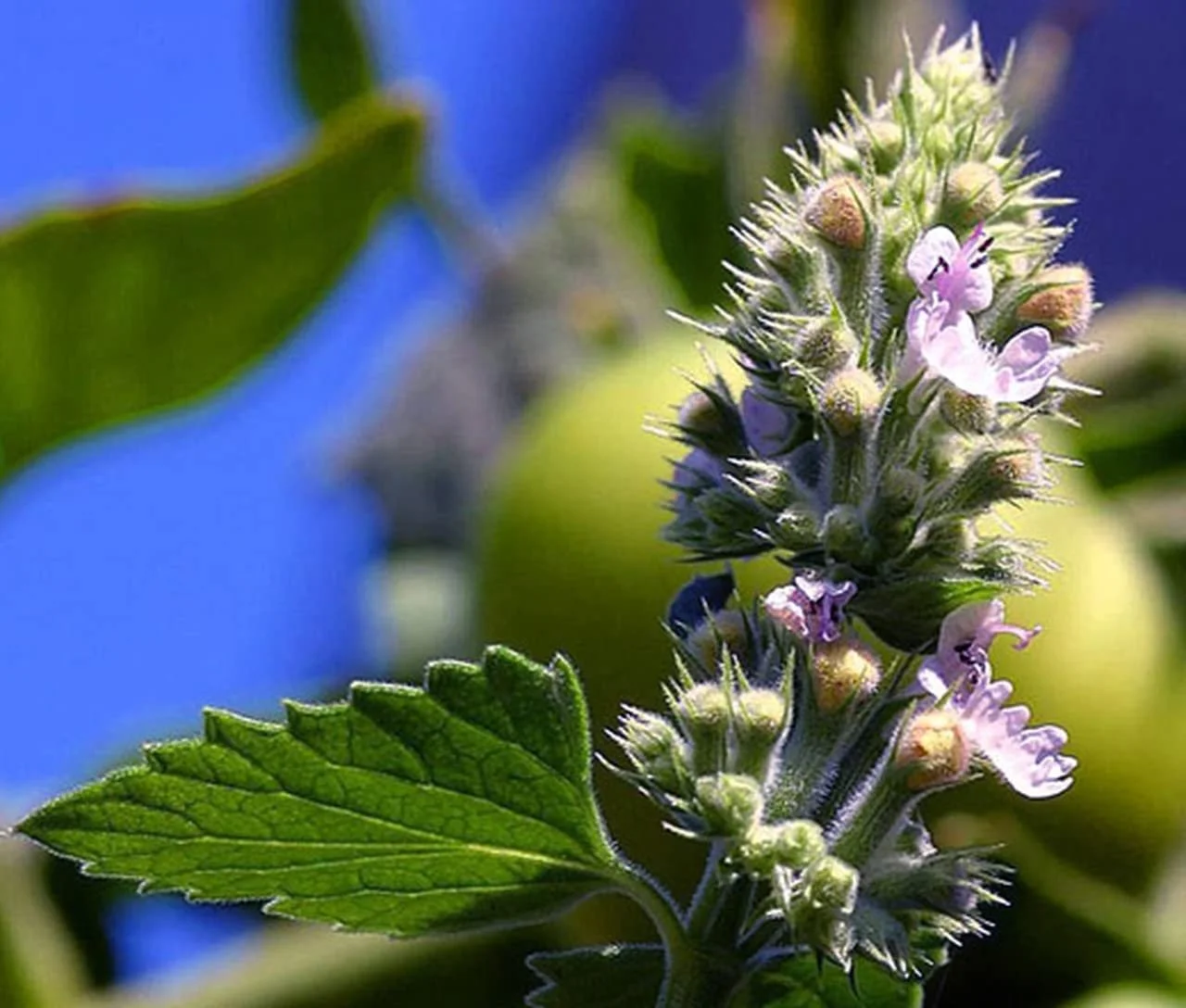
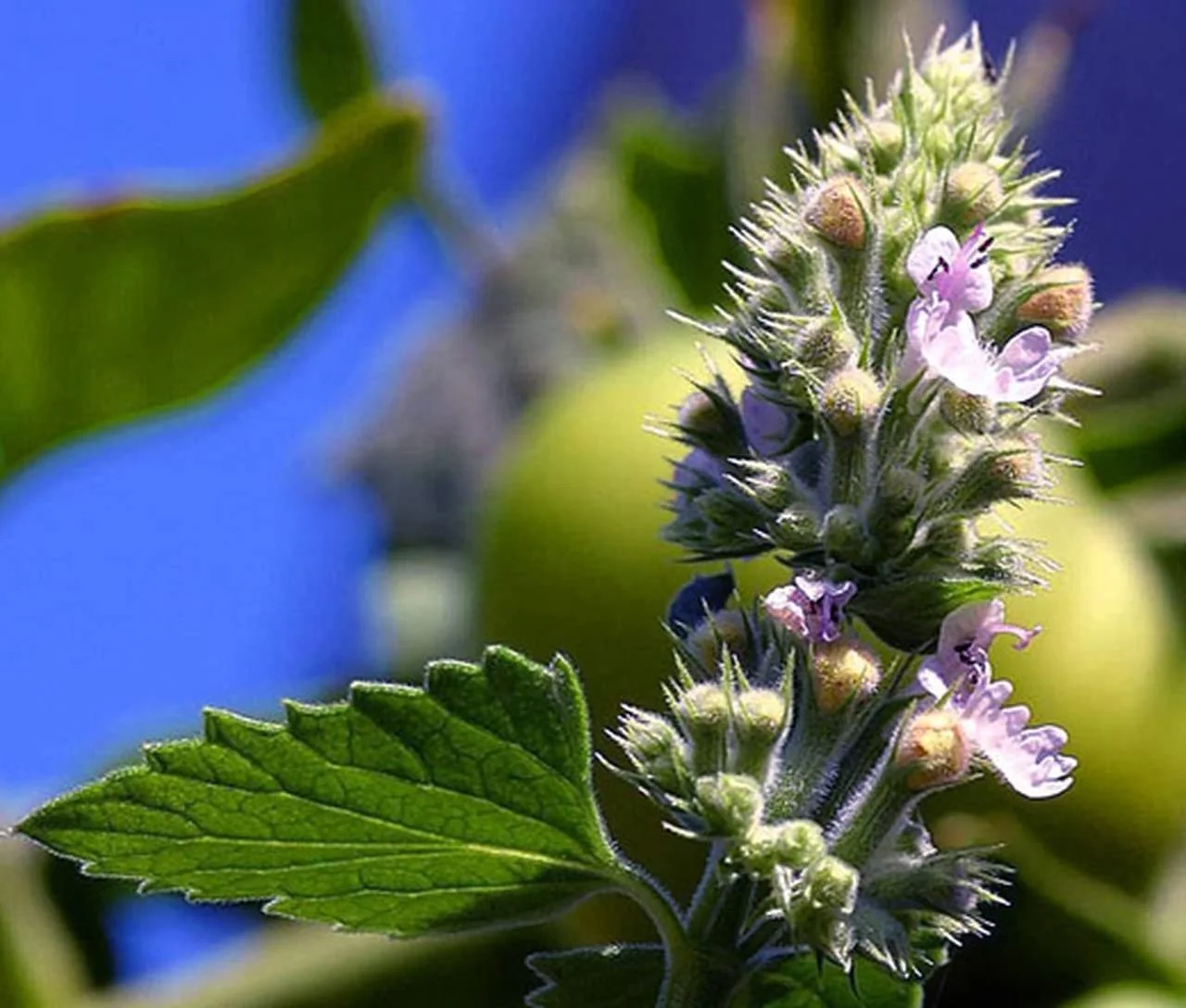
Best known as a stimulant for cats, catnip (Nepeta cataria) is a perennial herb in the mint family (Labiatae) native to Europe. The plant can grow up to three feet tall with white purple spotted flowers on the ends of its branches.
Cats, both domestic and wild, are attracted to catnip due to a mildly hallucinogenic chemical compound known as nepetalactone present in plant tissues. While it has no affect humans, the chemical affects cats to varying degrees, with some having an aggressive reaction.
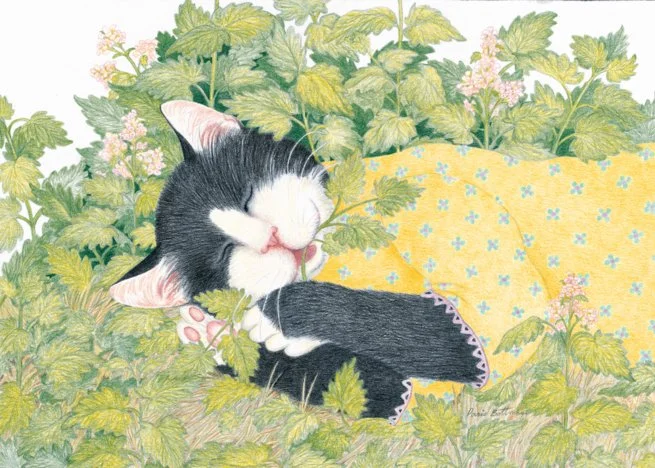
Catnip also has several properties beneficial to humans. Once used as a folk remedy for a wide variety of medical problems, today catnip’s essential oils are used in a number of pharmaceutical products and dietary supplements. For example, catnip contains thymol, a compound that can be used as antiseptic.
Nepetalactone, the essential oil in catnip, has been shown to be more effective at repelling mosquitoes than most commercial insect repellents. Its leaves can be crushed and boiled with water or vinegar to make a spritz, or the plant’s leafy stalk can be crushed rubbed directly on skin or clothing.
Catnip extract has a mild antispasmodic effect which reduces muscle cramps.
Marketing
Catnip is primarily marketed for cats in stuffed toys, catnip-filled balls, compressed pellets, and in shaker bottles. Marketing possibilities include farmers markets, pet stores, and higher-end retail stores.
Most commercial catnip for toys is of a lower grade, consisting of dried, ground-up stalks, as well as leaves. The most aromatic portions of the plant are the blossoms and leaves.
Cultivation
Catnip prefers sites with full sun, well-drained soil, and adequate moisture. The herb can be propagated by seed, stem cuttings, or division.
Commercially grown catnip is generally seeded and grown in a greenhouse or hotbed until plants are the proper size for transplanting.
Greenhouse float beds and transplanters designed for tobacco production can be used for catnip. Plants are transplanted to the field mechanically or by hand once all danger of frost has passed. Small seed size and slow germination, along with a poor ability to compete with weeds, makes direct seeding to the field difficult.
Catnip is a moderate nitrogen feeder, so a preplant broadcast of nitrogen is recommended. Additional applications can be sidedressed after harvest to speed regrowth.
Pest management
Since catnip oil contains compounds that discourage insect feeding and fungal growth, it has few insect and disease pests. Weeds are the greatest threat to production because catnip is a poor competitor with other plants. Since there are no herbicides labeled for this crop, hand weeding and cultivation are required for weed control.
Harvest and storage
Catnip is ready to harvest at full bloom when aromatic properties are at their peak. Stems are cut a few inches above the crown to allow for plant regrowth. Generally, plantings may be cut twice (mid-summer and fall) during the growing season. Cutting can be accomplished by hand or with a side bar cutter mower. Some growers gather the crop using a standard baler once stems have dried sufficiently.
Harvested plants are dried naturally in the shade or with an artificial dryer. Further drying and processing may be required, depending on the buyer and use.
