
Index of Farmer's Market Online® Guides
Farm Kitchen
Breads
Chocolate
Coffee
Corn
Curry
Raisins
Spices and Culinary Herbs
Tea
Good Spirits & Fine Liqueurs
Bourbon
Brandy
Gin
Rum
Tequila
Vodka
Whiskey
Home & Garden
Candles
Dough Figurines
Wreaths
In Season
Air Plants
Aloe Vera
Artichoke
Asparagus
Basil
Blackberries
Blueberries
Blood Orange
Cabbage
Catnip
Cranberries
Egyptian Walking Onions
Figs
Garlic
Grapefruit
Kale
Kohlrabi
Pawpaw
Peaches
Pecans
Peppers
Pomegranates
Pumpkin
Shelling Beans
Sour Cherries
Meats & Fish
Turkey
Nuts & Grains
Chestnuts
Plants
Air Plants
Azaleas
Bigleaf Hydrangea
Bonsai
Bronze Dutch Clover
Camellia
Carnivorous Plants
Catnip
Chestnut
Christmas Cactus
Cranberry
Easter Lily
Gentian
Heuchera
Mint
Orchids
Ornamental Cabbage
Ornamental Grasses
Pasque Flower
Pawpaws
Pinyon Pine
Poinsettia
Roseroot
Salvia
Sneezeweed
Voodoo Lily
Zinnia
Specialty Foods
Spices
Sweet Potato
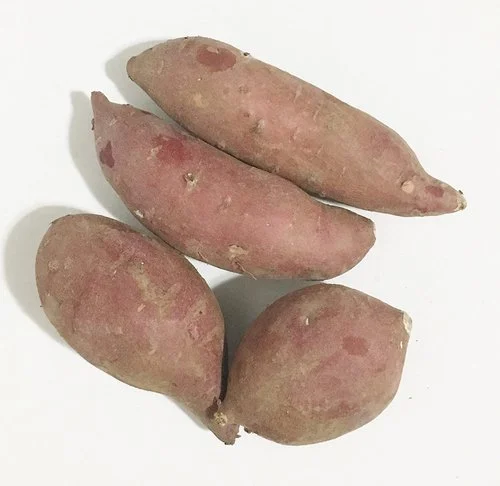
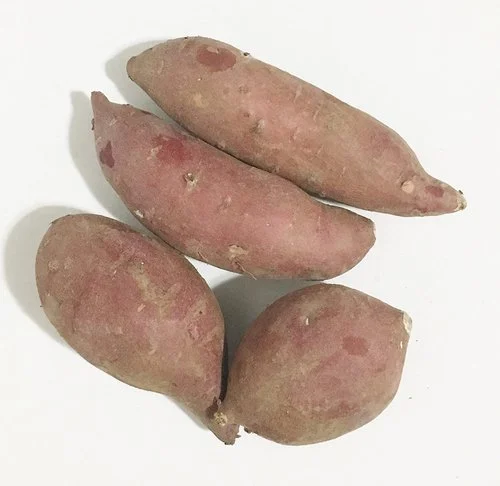
Domesticated some 5,000 years ago in South America, the sweet potato with yellow or orange flesh covered by a thin skin of yellow, orange, red, or purple reaches maturity in late summer and has a peak harvest season extending from late October through December.
Sweet potatoes are sweet, soft and taste almost decadent, yet they are full of fiber and vitamins.
There are two distinct varieties: the light-skinned, white-fleshed variety (which many find bland and unpleasant to eat) and the dark-skinned variety, which has a deep-orange flesh. The darker-fleshed sweet potatoes are moister, softer, sweeter, generally less fibrous and more nutritious than the white-fleshed.
Nutrition
Sweet potatoes are rich in vitamin A, which is especially good for the skin and reputed to be a remarkable anti-wrinkling agent.
Sweet potatoes rank tops in nutrition above all other vegetables by the Center for Science in the Public Interest. They offer fiber, complex carbohydrates, vitamin C, calcium, and more.
Selection
Look for firm potatoes with no wrinkles, sprouts or decay. Skins should be smooth, with no bruises or gouges.
Choose small-to- medium, rather than larger sweet potatoes. Larger sweet potatoes take longer to bake and often have a tough, woody taste.
Handling and Storage
Do not wash sweet potatoes until preparing to eat. Keep sweet potatoes in a cool, dry place, not the refrigerator. When ready to use, scrub with a vegetable brush under cool running water.
Preparation
Cook whole when possible as most the nutrients are next to the skin. Sweet potatoes are difficult to peel when raw and will discolor (darken) quickly. Whether baked, boiled, microwaved or fried, sweet potatoes are a delicious addition to any meal. Use sweet potatoes in soups, casseroles or as a substitute for white potatoes.
When baked and pureed, sweet potatoes also can be substituted for pumpkin in quick breads, muffins and pies.
When baking whole, place on a baking pan in an oven at 350 degrees F for about 60 minutes.