
Index of Farmer's Market Online® Guides
Farm Kitchen
Breads
Chocolate
Coffee
Corn
Curry
Raisins
Spices and Culinary Herbs
Tea
Good Spirits & Fine Liqueurs
Bourbon
Brandy
Gin
Rum
Tequila
Vodka
Whiskey
Home & Garden
Candles
Dough Figurines
Wreaths
In Season
Air Plants
Aloe Vera
Artichoke
Asparagus
Basil
Blackberries
Blueberries
Blood Orange
Cabbage
Catnip
Cranberries
Egyptian Walking Onions
Figs
Garlic
Grapefruit
Kale
Kohlrabi
Pawpaw
Peaches
Pecans
Peppers
Pomegranates
Pumpkin
Shelling Beans
Sour Cherries
Meats & Fish
Turkey
Nuts & Grains
Chestnuts
Plants
Air Plants
Azaleas
Bigleaf Hydrangea
Bonsai
Bronze Dutch Clover
Camellia
Carnivorous Plants
Catnip
Chestnut
Christmas Cactus
Cranberry
Easter Lily
Gentian
Heuchera
Mint
Orchids
Ornamental Cabbage
Ornamental Grasses
Pasque Flower
Pawpaws
Pinyon Pine
Poinsettia
Roseroot
Salvia
Sneezeweed
Voodoo Lily
Zinnia
Specialty Foods
Spices
Pawpaw
Pawpaws (Asimina trilobe) are native to the Eastern woodlands of the United States. They go by a variety of names, including sugar apple, custard apple, sweetsop, and poor man’s banana.
They produce the largest edible fruit indigenous to this country. The pawpaw was once planted at Monticello and prized by Thomas Jefferson. Said to be a favorite dessert of George Washington, its history goes back to native Americans, who propagated it for its large, delicious fruit. Records show that in 1806 Lewis and Clark relied on this fruit during their travels.
The pawpaw, an understory tree, grows best in dabbled shade when young, but produces larger and more abundant fruit in full sun. Some growers recommend planting new trees under a shade screen. A deciduous tree growing from 15 to 20 feet tall with glossy, dark green leaves, it has a narrow conical shape.
Its long, oval leaves reflect its relation to tropical trees. The tree produces velvety maroon, upside-down flowers in the spring, and its leaves turn a pretty yellow in the fall. The beautiful zebra swallowtail butterfly is one of the few insects that eat these leaves.
Propagation by seed is difficult. The pawpaw requires a minimum of 400 hours of winter chill and 160 frost-free days, as well as two different varieties for pollination and fruit. Pawpaws take patience to grow, requiring at least five years’ maturity to bear fruit. The easiest way to grow a pawpaw is by root cuttings. Suckers naturally spread the plants into groves. Remember the old school song “Way down yonder by the pawpaw patch?”
You can buy pawpaw trees propagated commercially. Look for cultivars like PA Golden, Sunflower, Triple Play or Wellis. Many of the best growers have waiting lists because of the renewed interest in this plant.
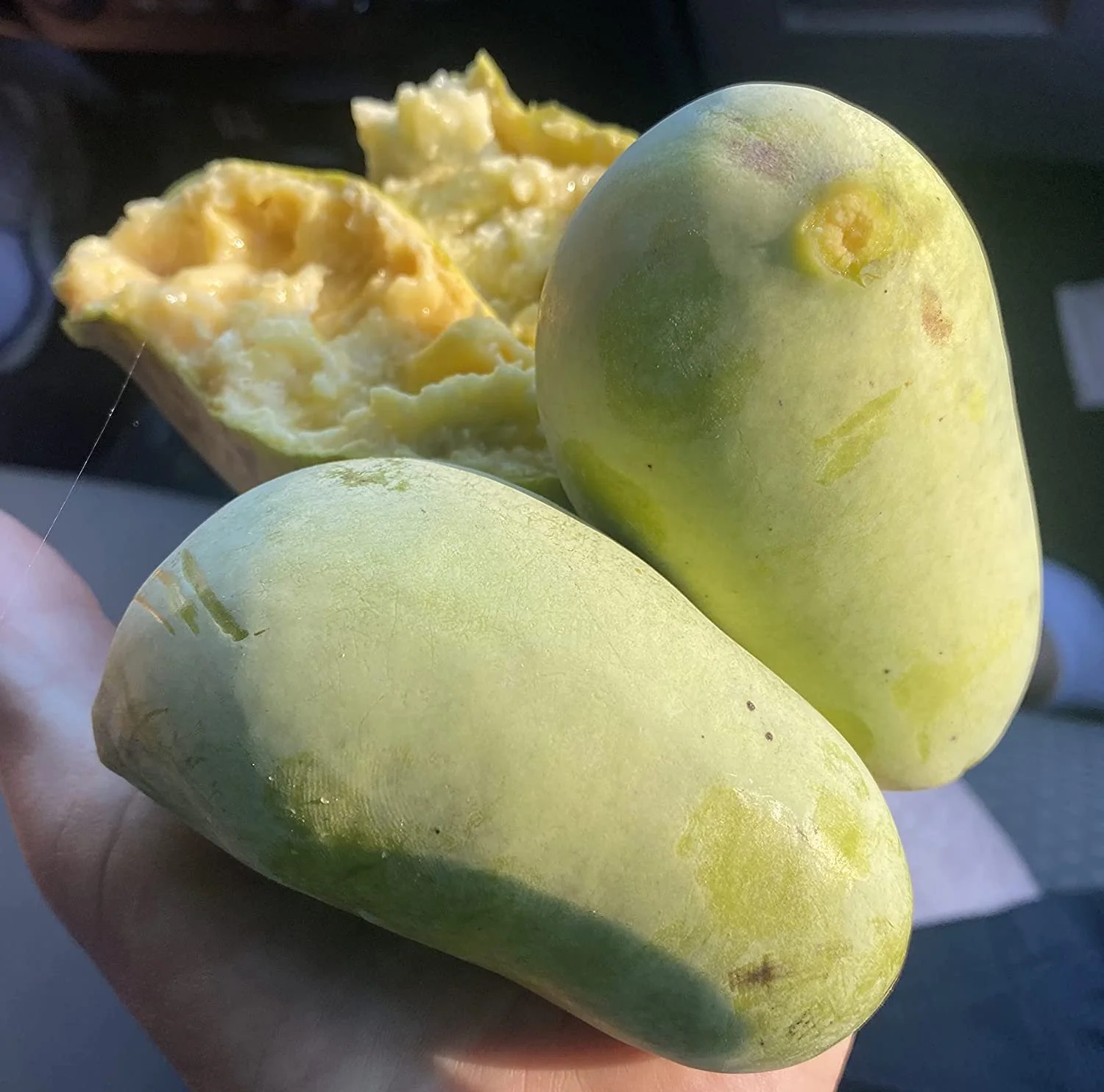
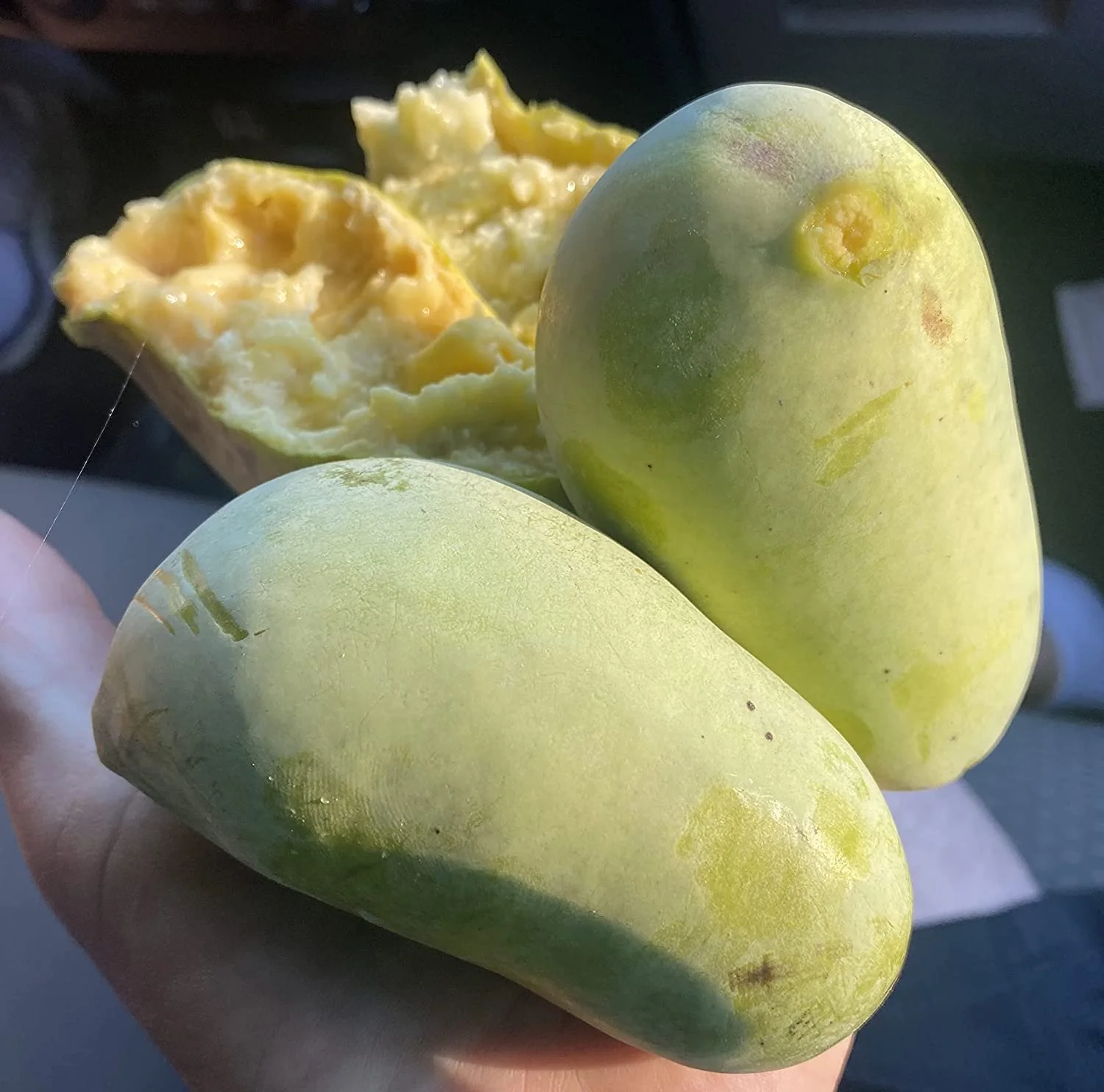
The large fruit is smooth green and shaped like a potato. Soft when ripe, the light lemon-colored flesh is dotted by large, lima bean-shaped black seeds. Fruits can be up to a pound each and grow in clusters. People compare the taste to a combination of flavors -- banana, melon, and pineapple.
The soft, ripe pawpaws are difficult to transport and have a very short shelf-life, making them unattractive to commercial growers. There are currently very few pawpaw orchards, so if you want to enjoy this native fruit, your best bet is to grow your own or look for them in late summer at the farmers market.