
Index of Farmer's Market Online® Guides
Farm Kitchen
Breads
Chocolate
Coffee
Corn
Curry
Raisins
Spices and Culinary Herbs
Tea
Good Spirits & Fine Liqueurs
Bourbon
Brandy
Gin
Rum
Tequila
Vodka
Whiskey
Home & Garden
Candles
Dough Figurines
Wreaths
In Season
Air Plants
Aloe Vera
Artichoke
Asparagus
Basil
Blackberries
Blueberries
Blood Orange
Cabbage
Catnip
Cranberries
Egyptian Walking Onions
Figs
Garlic
Grapefruit
Kale
Kohlrabi
Pawpaw
Peaches
Pecans
Peppers
Pomegranates
Pumpkin
Shelling Beans
Sour Cherries
Meats & Fish
Turkey
Nuts & Grains
Chestnuts
Plants
Air Plants
Azaleas
Bigleaf Hydrangea
Bonsai
Bronze Dutch Clover
Camellia
Carnivorous Plants
Catnip
Chestnut
Christmas Cactus
Cranberry
Easter Lily
Gentian
Heuchera
Mint
Orchids
Ornamental Cabbage
Ornamental Grasses
Pasque Flower
Pawpaws
Pinyon Pine
Poinsettia
Roseroot
Salvia
Sneezeweed
Voodoo Lily
Zinnia
Specialty Foods
Spices
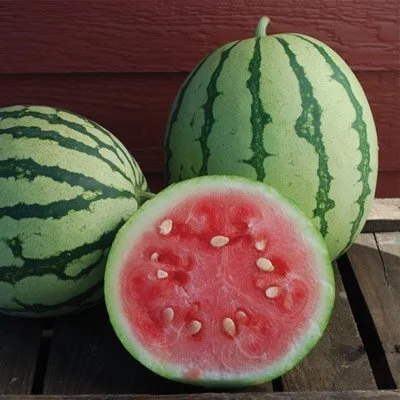
Watermelon
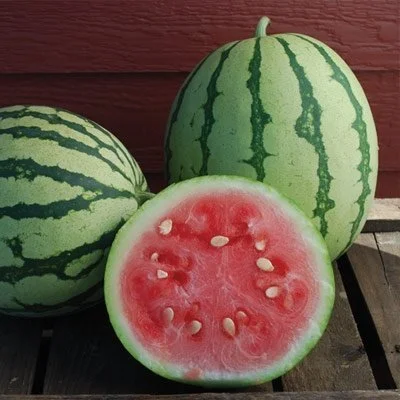
A member of the gourd family like the squash and the pumpkin, watermelon was being consumed as early as 2400 B.C., according to Egyptian hieroglyphics.
How To Choose A Watermelon (It's Not By Sex)
Inspect the watermelon to make sure it is firm, symmetrical, and free from bruises and cuts.
Lift it up to verify that it is heavy for its size.
Size and shape can differ greatly in watermelons based on rainfall/irrigation, nutritional status, weather and pollination success. Poor or incomplete pollination can cause misshapen fruit to develop. But contrary to what some people claim, size does not reflect flavor or sweetness. A large watermelon can be just as sweet as a small one.
Turn the watermelon over. There should be a creamy yellow spot on one side from where it sat on the ground to ripen.
Forget choosing by sex, because there are no male fruits. A watermelon develops from the fertilization of ovules in a female flower. Watermelon plants produce separate male and female flowers. Pollen from the male flowers is conveyed, usually by honey bees, to the female flowers. After pollination, fertilization of each ovule occurs and the former female flower develops into a fruit.
Is Watermelon Nutritious?
Watermelon is 92 percent water and it is high in lycopene, an antioxidant that may prevent some types of cancer and cardiovascular disease.
The deep orange or red flesh of the watermelon is high in vitamin C and rich in vitamin A. Vitamin A keeps the eyes healthy, while vitamin C aids with faster healing.
Watermelon is also a good source of vitamin B6, which helps boost the immune system, maintain regular nerve function, and produce red blood cells. It also contains potassium, a mineral that assists with blood pressure regulation.
To top it off, watermelon is low in calories. There are about 92 calories in two-thirds of a cup.
In addition to these benefits, it is one of the fruits with the least amount of pesticide residues, according to the Environmental Working Group.
How To Harvest Watermelon
Depending on the variety and source, watermelons are available all year but they peak in the late summer and early fall.
Watermelon is best when picked ripe, as it does not continue to ripen after harvest. A good sign of my ripeness is a clean break between the fruit and stem, rather than just a cut in the stem.
With age, the gourd will create more internal liquid as the pectic substances in its cell walls get more soluble.
How To Prepare Watermelon
Wash your hands. Then, wash the watermelon in running water, rinse it well, and pat it dry. Cut it into one inch chunks, after removing the rind.
How To Store Watermelon
Store cut watermelon in a covered container in the refrigerator for up to three or four days.
Uncut watermelon should be stored at room temperature until ready to eat. If the fruit is stored properly, uncut watermelon should last about two weeks.
Watermelon Used to Be Wild Looking
According to genetic study, wild watermelon originated in parts of Africa, but it shared little resemblance to the sweet summer fruit we eat today. The most clear depiction of what the green-skinned gourd once looked like comes from a 17th-century painting by Italian artist Giovanni Stanchi. The watermelon looks similar on the outside to what we see in stores now, but the inside looks truly, well, wild: It featured a pale, rind-like flesh marked by swirling, recessed pockets of seeds. Researchers believe the fruit would likely have been sweet even in its early state, although not as sweet as the selectively bred bright-pink species we enjoy today.