
Index of Farmer's Market Online® Guides
Farm Kitchen
Breads
Chocolate
Coffee
Corn
Curry
Raisins
Spices and Culinary Herbs
Tea
Good Spirits & Fine Liqueurs
Bourbon
Brandy
Gin
Rum
Tequila
Vodka
Whiskey
Home & Garden
Candles
Dough Figurines
Wreaths
In Season
Air Plants
Aloe Vera
Artichoke
Asparagus
Basil
Blackberries
Blueberries
Blood Orange
Cabbage
Catnip
Cranberries
Egyptian Walking Onions
Figs
Garlic
Grapefruit
Kale
Kohlrabi
Pawpaw
Peaches
Pecans
Peppers
Pomegranates
Pumpkin
Shelling Beans
Sour Cherries
Meats & Fish
Turkey
Nuts & Grains
Chestnuts
Plants
Air Plants
Azaleas
Bigleaf Hydrangea
Bonsai
Bronze Dutch Clover
Camellia
Carnivorous Plants
Catnip
Chestnut
Christmas Cactus
Cranberry
Easter Lily
Gentian
Heuchera
Mint
Orchids
Ornamental Cabbage
Ornamental Grasses
Pasque Flower
Pawpaws
Pinyon Pine
Poinsettia
Roseroot
Salvia
Sneezeweed
Voodoo Lily
Zinnia
Specialty Foods
Spices
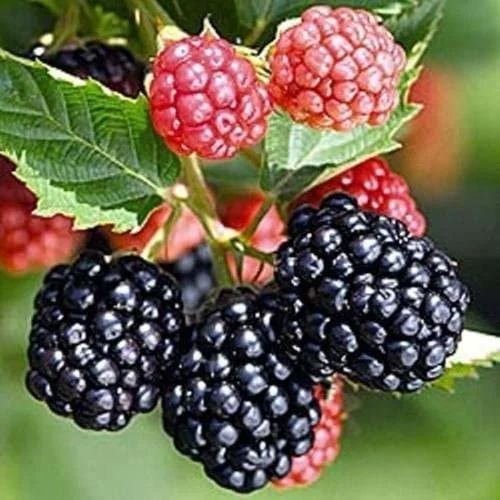
Farmer's Market Online® Guide to Blackberries
Look for blackberries in markets beginning in June, from California to Virginia. Further north, the crop matures late June through August and September.
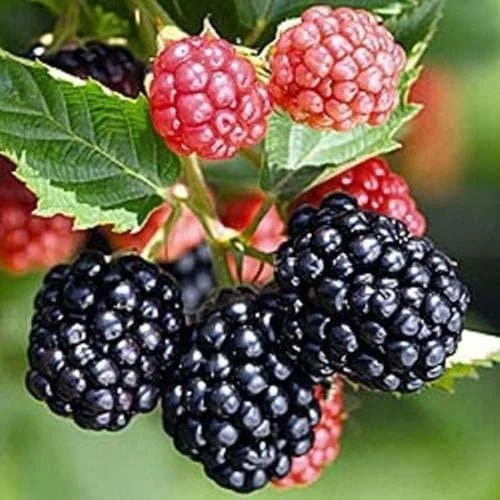
Triple Crown Thornless Blackberry
Fresh Blackberries For Sale
Look for these sweet Zone 5-9 caneberries in markets beginning in June, from California to Virginia. Further north, the crop matures late June through August and September.
Blackberry Prices
Average price for fresh berries is six dollars a pound, a couple dollars less at pick your own fields.
Oregon is the largest producer with over 20,000 tons on 6,000 acres.
Nutrition
A good source of vitamin C and potassium, full of antioxidants and fiber.
Selecting
Choose berries shiny and firm, not soft and mushy; use within a week, or freeze for up to a year.
Preparation
It is best to wash blackberries immediately before eating, because water will begin to disintegrate them if they are washed and then left to sit.
Growing a Profitable Crop
Improved production techniques and new, more winter-hardy varieties, have made blackberries a more viable option for commercial growers. While yields are highly dependent on the type of production system used and the varieties grown, most growers can get at least $3 per pound or $5 per quart for blackberries.
Using a rotatable cross-arm trellis allows blackberry canes (stems) to be put on a training wire horizontally and grown about a foot above soil level. In cooler months, the entire trellis can be rotated down close to the ground level and the plants can be covered with thick row covers for winter protection, allowing farmers to grow more varieties that traditionally haven't been winter hardy.
Growers can generate a gross revenue of $45,000 per acre using this system, although it can be costly to set up.
