
Index of Farmer's Market Online® Guides
Farm Kitchen
Breads
Chocolate
Coffee
Corn
Curry
Raisins
Spices and Culinary Herbs
Tea
Good Spirits & Fine Liqueurs
Bourbon
Brandy
Gin
Rum
Tequila
Vodka
Whiskey
Home & Garden
Candles
Dough Figurines
Wreaths
In Season
Air Plants
Aloe Vera
Artichoke
Asparagus
Basil
Blackberries
Blueberries
Blood Orange
Cabbage
Catnip
Cranberries
Egyptian Walking Onions
Figs
Garlic
Grapefruit
Kale
Kohlrabi
Pawpaw
Peaches
Pecans
Peppers
Pomegranates
Pumpkin
Shelling Beans
Sour Cherries
Meats & Fish
Turkey
Nuts & Grains
Chestnuts
Plants
Air Plants
Azaleas
Bigleaf Hydrangea
Bonsai
Bronze Dutch Clover
Camellia
Carnivorous Plants
Catnip
Chestnut
Christmas Cactus
Cranberry
Easter Lily
Gentian
Heuchera
Mint
Orchids
Ornamental Cabbage
Ornamental Grasses
Pasque Flower
Pawpaws
Pinyon Pine
Poinsettia
Roseroot
Salvia
Sneezeweed
Voodoo Lily
Zinnia
Specialty Foods
Spices
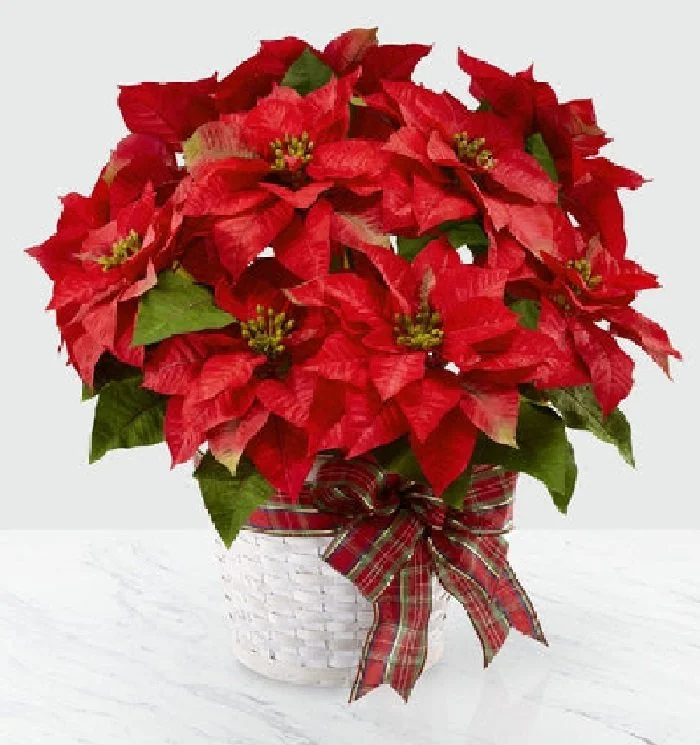
Poinsettia
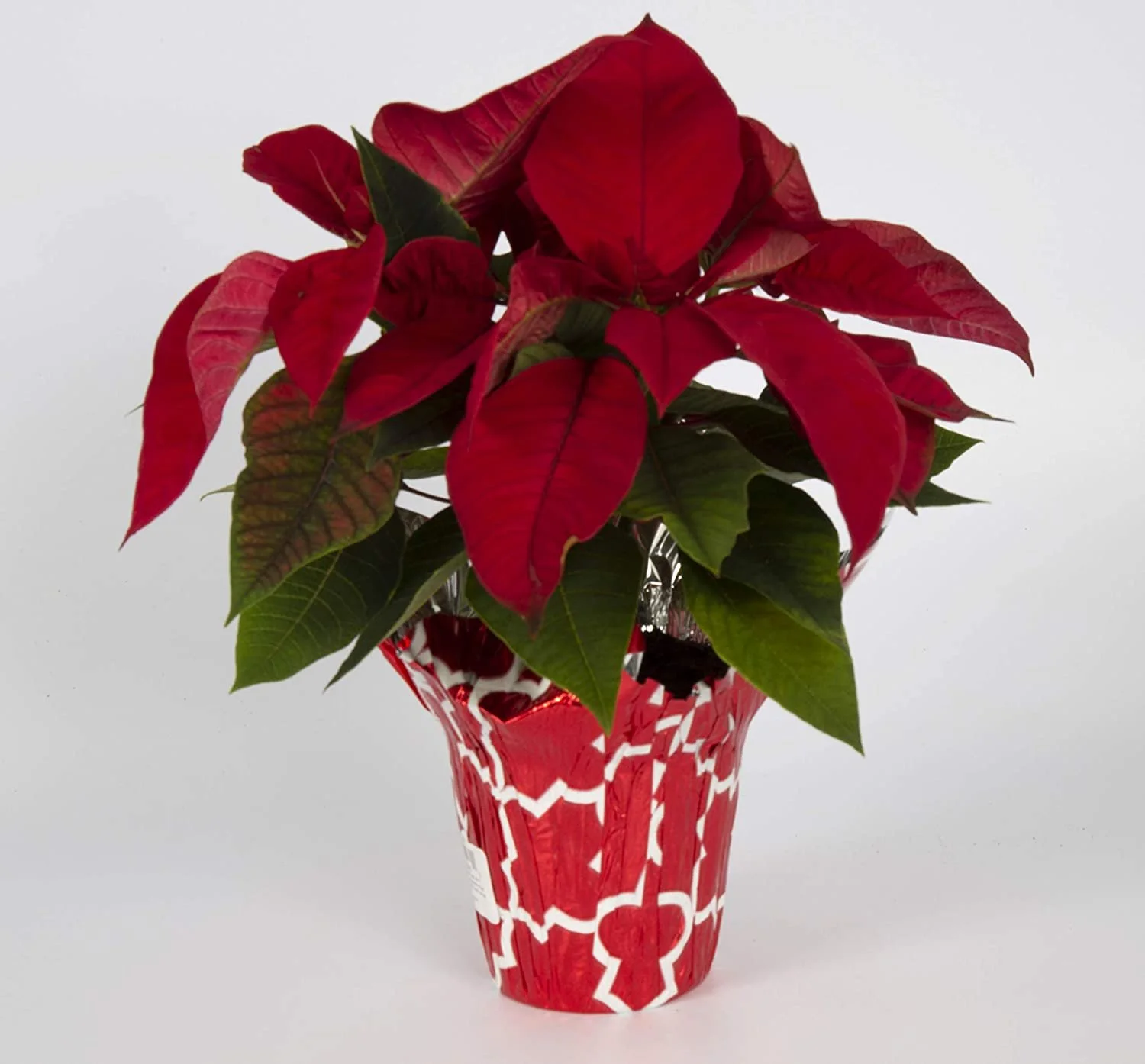
The Christmas poinsettia is the most popular potted plant in America.
Poinsettia is native to Central America and was brought to the United States for cultivation in 1828 by Joel Poinsett. In their native environments, these plants reach 15 feet tall by about the same width.
Named after Poinsett, its chief promoter, the plant was commonly known as "poinsettia" by 1836. Poinsett died on December 12, 1851, in the middle of his namesake plant’s blooming season.
While its native coloring is red, the poinsettia has subsequently evolved into many different colors and varieties. It now blooms in colors of brilliant crimson, red, pink, white, salmon, orange, yellow, purple and blue. Some are the result of color additives that give the blooms their brilliant colors; others are created through hybridization. They also come in dual shades of pink and white, red with white speckles, and in double shades of pink.
Some poinsettia have rounded petals, others have jagged ones and some varieties even contain a double-petal bloom like the ‘winter rose’ variety.
Legends
In Central America, poinsettia are said to have originated with a couple of poor native children who wanted to present a gift to the Christ child at the Christmas Eve services. Sad that they could not bring riches to him, they gathered some weeds along the roadside on their way to the church to present at the foot of the nativity scene. They remembered the saying “that even the most humble of gifts, if given in love, will be accepted in his eyes.”
After the children laid the bouquet of weeds down by the nativity, the plant suddenly burst into blooms of brilliant red and all who had witnessed it swore they had seen a Christmas miracle. From that day on, the bright red flowers of the poinsettia have been known as the Flowers of the Holy Night, for they bloom each year during the Christmas season.
Selection
When selecting a poinsettia, be sure to avoid plants with bracts that are blackened or dry (cold inured).
Check out the true flowers at the center of the bracts. If they are fresh, the plant will be in display for a long time.
Care and Maintenance
Poinsettias prefer a bright, diffused light while in bloom. The best location for them in a home is away from drafts, temperature extremes of hot and cold, and direct sunlight.
These are tropical plants, so keep them indoors if the temperatures are going to be under 60-70 degrees. A cold poinsettia will turn yellow and drop its leaves. Poinsettias do not like to be fertilized while in bloom, but require it afterward when they resume their vegetative growth period.
Water moderately. Poinsettias will decline quickly when the roots are too wet. Only water when the soil surface is dry, and don’t let the pots stand in water
After the holidays, when the bracts start to drop, the plant will go into a dormant stage for about a month before starting new growth. When the new growth begins, place the plant in a well-lit location and lightly feed it with a general purpose fertilizer. When outside temperatures rise above 50 degrees, with lows not much colder, poinsettia plants can be placed in pots or planted outside to continue growing for best growth.
By the time autumn arrives, the poinsettia should have regained its lush, bushy character.
Rebloom
Getting a poinsettia to bloom again is difficult. The plant needs a very controlled environment in order to set flowers. One of the key elements for re-blooming is complete darkness for 12 to 16 hours a day starting in late September or early October. Any deviation from this can alter the setting of flowers on the plants. Some people set the plant in a dark closet each night to make sure it does not get any artificial light from within the room or outside the windows.
Once the color bracts start to form and the flowers have set (usually by mid-November if you have done it correctly) you can move them out into a bright location to enjoy for another season.
One thing to remember with the re-blooming poinsettia is that the flowers will be half the size of the original flowers when bought but more numerous.
Misconceptions
One of the most common misconceptions of the poinsettia plant is that it is poisonous to people or pets. Scientists have repeatedly proven this incorrect. A 50-pound child would have to consume more than 500 poinsettia bracts to have any ill effects, and the resulting symptoms would be akin to an allergy or irritation.
Similarly, a pet that eats poinsettia leaves will probably have an upset stomach and vomit them back up, but will suffer no other toxic effects.
Rather than being poisonous, the poinsettia is actually one of the most helpful houseplants in removing pollutants from the air.
The colored "bracts" that most people consider to be poinsettia flowers are actually leaves. The flowers are the tiny yellowish green buttons at the center of each set of bracts.