Farmer's Market Online® Guide to Basil
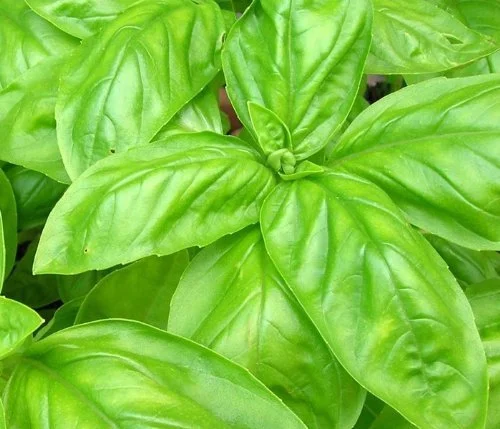
Most basils used for cooking, or culinary basils, are cultivars of the sweet basil species Ocimum basilicum. Loosely translated, Ocimum basilicum means "the king of fragrance."
A traditional herb used in Italian, Mediterranean, and Thai cookery, basil is one of the most widely used herbs in modern cooking. It adds flavor to pasta, rice, tomatoes, cheese, soups, salads, fish and poultry dishes.
Cultivation
During the summer, basil will benefit from a two- to three- inch layer of organic mulch to help retain soil moisture and minimize weeds.
Basil thrives in warm weather and will benefit from one inch of water per week.
Do not fertilize, as this will result in a decrease in flavor.
Harvest
For maximum flavor, harvest basil just as the flower buds begin to form. Harvest in the morning just after the dew has evaporated.
The best strategy for harvesting basil is to leave enough foliage on the plant so it will continue to grow. Cut top leaves off about 1/4 inch above a pair of leaves lower down on the stem. Basil may then be harvested every two to three weeks.
Basil plants have beautiful, edible and attractive flowers that can be used for garnishes.
Varieties
Siam Queen is a Thai basil that has bright green leaves, purple red stems and violet-pink flowers, which make a beautiful specimen in the garden. As with other culinary basil plants, its leaves may be harvested and used in cooking.