
Asparagus
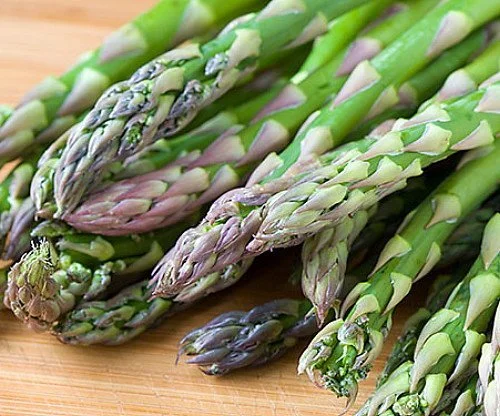
Asparagus is a perennial that provides one of the first vegetables harvested from the garden each season. Best of all, once a planting is established, it will last for many years, perhaps a lifetime. A vegetable garden in Vermont has had the same producing asparagus bed for more than 100 years.
Preparation
Asparagus is deliciously prepared in a variety of ways, and can be eaten cooked or raw. It can be easily incorporated into stir-fries, casseroles or salads.
Asparagus may be steamed, microwaved, roasted or grilled and eaten as a side dish. Each method takes approximately five to 10 minutes. Cook soon after harvest to retain the bright green color.
Add a handful of steamed asparagus pieces to an egg-white omelet along with feta cheese. Add chopped tomatoes for more flavor and color.
Saute asparagus in extra virgin olive oil and add some minced garlic, black pepper, and freshly grated Parmesan cheese if desired.
Add chopped asparagus to your next salad, sandwich or wrap.
Coat asparagus with olive oil spray and grill on medium-high heat for about 5-8 minutes until tender, turning if needed.
Make asparagus soup, or garnish your favorite soup with asparagus tips.
Serve raw asparagus with your favorite dip for an easy appetizer.
Toss cooked asparagus into cooked fettuccine, along with extra virgin olive oil, lemon juice, and your preferred spices.
Drizzle extra virgin olive oil and lemon juice over asparagus, wrap up in foil and bake for 20 minutes at 400 degrees Fahrenheit or until asparagus reaches desired tenderness.
Add asparagus, extra virgin olive oil, salt and pepper to a zip-lock bag. Shake until asparagus is coated and bake at 400 degrees until crisp.
Nutrition
Asparagus is loaded with folic acid, vitamin C, vitamin K, and has a great ratio of potassium to sodium. Loaded with fiber and anti-tumor compounds, asparagus contains quercetin, which is anti-inflammatory and cancer-fighting. One cup of this vegetable has just 30 calories.
Selection
When selecting asparagus, check out the tips to ensure they are nice and tight, firm, and closed.
Asparagus is a member of the lily family, related to onions and leeks. Its shoots grow tall to produce a spear rather than developing branches and leaves. Thickness, therefore, is not a good guide to freshness.
Choose odorless asparagus stalks with dry tips that are deep green or purple in color. Look at the bottom portion of the stems where the asparagus has been harvested. If the asparagus has been in the store for a while, the cut stem ends will be dry. Avoid limp, wrinkled or wilted stalks.
Asparagus is highly perishable and best when purchased soon after harvest.
Storage
To store asparagus, treat it like flowers: trim the stalks and place in an inch or two of water. Cover tips with plastic or a wet paper towel to keep them moist.
You can refrigerate asparagus for up to four days by wrapping the base end of stalks in a wet paper towel and placing in a plastic bag.
Asparagus will be least expensive when it is in season (from April to June). During the off-season (July to March) a person may find frozen asparagus nearly as cheap as fresh asparagus.
Before enjoying asparagus, you may need to trim the woody bottoms slightly.
Cultivation
Late winter or early spring is the best time for planting asparagus.
Expect to harvest asparagus 1,095 days (three years) after planting from seed. The first year, the plant develops a crown, or growing point, with an extensive root system. The second year, the crown begins to produce a fern-like shoot above ground. It isn't until the third year that the characteristic asparagus spears emerge from the crown in the spring and early summer.
Most growers choose to plant one- or two-year-old asparagus plants, commonly called roots or crowns, and only have to wait a year or two before their first harvest. Check with area garden centers early in the winter in case the crowns need to be ordered.
Asparagus grows best in fertile, well-drained soil that is high in organic matter. A soil test should be taken to determine fertilizer and lime needs. If adding lime to raise the pH level, it should be plowed in before the crop is planted. This is especially important for perennials such as asparagus since the soil once the bed is established it should not be disturbed again.
Weed control is crucial to developing a good crop. Many myths circulate about applying table salt to asparagus plantings to control weeds. Although it is true that asparagus will tolerate higher salt levels in soil than most weeds, this is a poor weed management strategy. The excess salts inhibit water penetration into the soil, potentially stressing the asparagus plants. It is also very likely that excess salts will leach out of the asparagus bed and affect other plants.
Weeds can be controlled in an asparagus bed using a multi-faceted approach. Early in the season before asparagus shoots emerge, cultivate shallowly to eliminate weeds. Follow up with three to four inches of mulch. If desired, apply pre-emergent herbicides such as trifluralin (the active ingredient in Preen) or corn gluten meal (an organic alternative) at this time, as well. Pay special attention to avoid applying pre-emergent herbicides in garden areas where seeds will be planted, as these herbicides will prevent any seeds from germinating, not just weed seeds.
It is also possible to apply non-selective herbicides such as glyphosate to an asparagus bed before the shoots emerge, or after the last harvest, as long as all asparagus spears are removed, as glyphosate will potentially kill the asparagus if it makes contact with green portions of the plant. This method is particularly effective when perennial weeds are a problem. As with any type of herbicide use, read and follow the label directions.
Asparagus crowns that are one year old are best to use when establishing a bed. Choose a locaruib at the edge of the garden so the plants are not disturbed when tilling in the spring. "A western exposure is best for asparagus; that way, the tall ferns that develop from the spears do not shade the rest of the vegetable plants during most of the day.
Be sure to add organic matter such as animal manure or compost. Adding the appropriate amount of commercial fertilizer will pay good dividends. Use 50 pounds of 6-12-12 or 5-10-15 per 1,000 square feet before setting crowns. Annual split applications of 6-12-12 or 5-10-15 at the rate of 1 to 2 pounds per 100 square feet should be adequate to keep asparagus actively growing.
Plant asparagus at the edge or side of the garden where it won’t be in the way of garden activities. Be sure to loosen the soil about a foot deep and incorporate well-rotted manure or compost to increase the drainage and organic matter.
Prepare a shallow trench no deeper than six inches and space the crowns 12 to 18 inches apart in the row. Then lightly cover the crown with soil and gradually fill in the furrow as shoots emerge. Never completely bury the developing asparagus fern.
Asparagus is dioecious, which means the male flowers are on one plant and the female flowers are on a separate plant. The green foliage is fern-like and produces excess food that is stored in the fleshy storage roots. The spears, which develop in early summer, are doing so at the expense of this stored food. For this reason, the harvest season should be regulated to allow sufficient time for the plant to replace this stored food.
It is best to leave the fern-like growth intact until it turns brown in the fall. Like spring bulbs, the foliage of asparagus helps generate energy for the following year.
Plants should be fertilized each spring before shoots emerge with 20 to 25 pounds per 1,000 square feet of a balanced fertilizer, followed by another treatment after the last harvest.
Leaving some shoots in the ground will maintain quality over time, fueling future harvests. A well-maintained bed will keep producing each year for 20 years or more.
Harvest
Asparagus can be harvested either by cutting or snapping the shoots near the base. Cut shoots will need to be trimmed before cooking to remove the tough fibrous ends. Trimming is not necessary if shoots are harvested by the snapping method, since they will have broken where the tougher stem material began. To do this, grasp each spear and gently bend it until it naturally breaks.
Varieties
When growing asparagus at home, look for male hybrids such as Jersey Knight, Jersey King, and Jersey Giant. These were developed in New Jersey, the fourth largest producer of fresh asparagus in the United States. Not only do these male hybrids yield more, they show resistance to rust and fusarium, common fungal diseases in asparagus.
Asparagus is a dioecious plant, meaning the sexes are on separate plants. The female plant produces larger spears but also produces seeds which become ‘weeds’ in the garden. Because of research and breeding programs, there are several improved varieties of asparagus from which to choose now.
There are 20 varieties of edible asparagus. White varieties are grown in a way to prevent sunlight exposure to the spear, and inhibit production of chlorophyll. These varieties will have a more delicate flavor and texture.
Other varieties exhibit various levels of purple hues.
It turns out that asparagus-and purple asparagus in particular-is full of anthocyanins, which give fruits and veggies their red, blue, and purple hues. These phytonutrients have antioxidant effects and potential health benefits that boost the nutrient density of asparagus.
When selecting asparagus, check out the tips to ensure they are nice and tight, firm, and closed.
Choose odorless asparagus stalks with dry tips that are deep green or purple in color. Look at the bottom portion of the stems where the asparagus has been harvested. If the asparagus has been in the store for a while, the cut stem ends will be dry. Avoid limp, wrinkled or wilted stalks.
Examples of older varieties such as Mary Washington, Waltham or Roberts once were good but have since been replaced by improved and more productive all male varieties such as Apollo, Jersey Knight, Jersey Giant, Jersey Queen, Jersey Deluxe and Jersey Gem.
White asparagus is regular green asparagus that has had soil loosely mounded over the top as the spears emerge. The spears remain milky white without exposure to sunlight. It's a lot more labor intensive than regular asparagus, so it's more expensive in the market.
Sources:
Jay Chism, agronomy specialist, University of Missouri Extension.
Frank Watson, University of Georgia Extension agent in Wilkes County, Georgia
Dr. Pam Duitsman, (417) 874-2957, University of Missouri Extension
Jennifer Nelson, University of Illinois Extension
The Hawaii Farmers Market Cookbook